
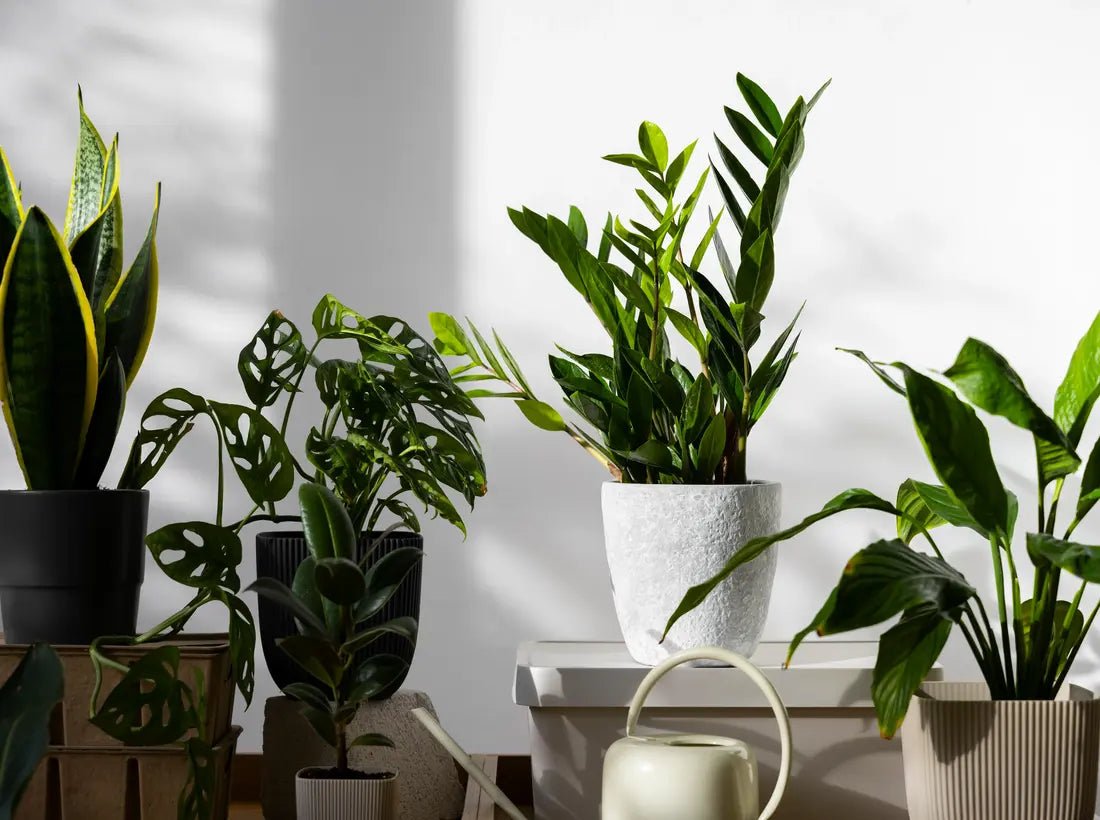
You love plants as much as the next person, but for some reason, it’s much harder for you to keep them alive than it is for others.
Or is it?
To be honest, taking care of live plants is hard, especially when dealing with a demanding species. Between unpredictable schedules, dim apartments, and the guilt of watching yet another beautiful plant turn brown, many of us have given up on the “plant parent” dream.
But you don’t have to give up on owning plants altogether; you can just find an alternative, like high-quality artificial plants. Since today’s faux greenery is realistic, you can achieve a near-identical display with ⅓ of the effort.
As we head into 2026, the artificial plant industry is undergoing a revolution in quality, safety, and design innovation. So, if you’re looking for new decor ideas, these 2026 trends will help you create spaces that feel fresh and safe (without any plant guilt).
Want to learn more?
Let’s dig in.
What Are the 6 Most Impactful Fake Plant Trends for 2026?
The artificial plant market is projected to reach $1.51 billion by 2032, and there’s a reason why.
Modern faux greenery combines hyper-realistic design and practical innovations that make it a smart choice for American homes and businesses. The 2026 trends reflect a shift toward artificial plants as architectural elements rather than simple accessories.
Here are the 6 trends reshaping how we think about indoor greenery:
-
Hyper-realistic textures

Modern, high-quality artificial plants now feature real-touch finishes that feel soft and bend naturally. For example, at Designer Plants, we use our proprietary RealTex technology to replicate the natural texture and appearance of real leaves with extraordinary detail.
This advanced system means creating molds from real plants to capture the intricate details like subtle color variations and organic imperfections that make nature beautiful.
Nowadays, clients are asking for nuanced color palettes with varied green tones that won’t chip or fade. They want natural shapes and textures that stand up to the real thing, even from up close.
Tip: If realism is at the top of your demands for artificial plants, we suggest placing your realistic fake plants alongside real foliage and in a space that gets attention (entryways, beside reading chairs, etc.).
-
Fire safety certification

For businesses, fire safety has always been a priority. But in 2025, we noticed an uptick in homeowners requesting fire protection for their residential installations, too, especially if they’re outside and close to a grill. For 2026, we expect this trend to continue, particularly in fire-conscious states like California and Florida.
To address this pressing need, our team at Designer Plants has developed FireTex, a fire-resistant technology that integrates advanced fire-retardant compounds directly at the polymer level during manufacturing to ensure it doesn’t degrade over time. When exposed to flames, the fauxliege doesn’t propagate the flame. Instead, it self-extinguishes.
Tip: If you’re working with commercial installations, we strongly suggest looking for exclusively NFPA 701-certified plants and checking whether they meet all the requirements. For homeowners, we recommend using these panels in open-plan spaces with fireplaces or kitchens.
-
Modular faux green wall panels

In 2025, a large chunk of our clients created bespoke displays by using a mix of different artificial green wall panels. Many of our clients last year requested a mix of panels that can mix and match within a single installation to create a personalized design.
This modular system allows you to combine multiple foliage varieties (like boxwood, tropical, and ferns) to build a custom composition that reflects your aesthetic vision, as many clients have done for their own projects.
At Designer Plants, we even offer a green wall set that’s made with this in mind, the Triptych: to allow you to make a manicured or organic look. This way, you can have a formal appearance (with the same foliage placements) or a wild-garden feel (with different foliage placements).
Tip: If you want more panels within your installation, start by selecting the focal foliage style first, then add complementary panels for extra dimension. Arrange your panels in a pattern to achieve that visual movement that will make the green wall look unique.
-
Customizable displays

Today, you’ll see extensive personalization options for all kinds of artificial plants, but especially faux vertical gardens. This makes sense, as not every type of panel is the best fit for every space. Our team has accounted for this need and regularly recommends ideas for customizing your installation and making it your own.
We can help with some adjustments, like altering color tones or modifying density (for certain panels). For others, it’s completely up to you. Use your imagination to take your faux green wall to new heights with lighting, artificial stems, signs, or architectural features.
Tip: Don’t be afraid to mix and match custom elements to make the installation your own. Try aligning your design with your existing decor, or making it stand out as a focal point.
-
Custom topiary sculptures

Artificial topiary animals and sculptural shapes have long been creative attractions in both residential and commercial spaces. We’ve seen oversized dramatic forms, abstract shapes, and animal lookalikes that serve as the best conversation starters.
Custom topiaries are a fantastic statement piece for your outdoor space, porch, or patio. In commercial spaces, they’re best used for theme parks, airports, and creative office spaces. When it comes to placements, we usually see them in entryways to create memorable first impressions, or as anchors in empty corners.
Tip: If you’re decorating a residential space, use smaller topiary shapes like balls or cones to flank the doorways, a look reminiscent of European gardens. In commercial settings, go bold with custom animals, branded shapes, or geometric forms that reinforce your business identity.
-
Eco-friendly material blends

Last but not least, sustainability is still influencing 2026 design choices, and Designer Plants aims to be front and center with our EcoTex and SafeTex technologies. This means:
-
EcoTex ensures your faux plants are manufactured with environmentally responsible materials that are RoHS compliant and free of harmful toxins;
-
SafeTex guarantees the products are non-toxic and don’t emit VOCs (volatile organic compounds) that can harm indoor air quality.
We expect this push toward sustainable manufacturing to ramp up in 2026, so we’ll likely be seeing a drive to reduce waste throughout the entire artificial plant lifecycle.
If you decide to purchase a faux green wall from our collection, you also have access to our pioneering recycling program, where we accept old panels and repurpose them into new products and homewares.
Tip: When shopping for artificial plans, make sure you ask manufacturers for proof of ISO, REACH, and RoHS certifications, along with warranty coverage. Remember that a single high-quality plant can last up to 15 years indoors with the right care, which is far more sustainable than constantly replacing cheap fauxliege that degrade quickly.
Finishing Thoughts
We hope these 2026 artificial plant trends will show you that you don’t have to settle for a space devoid of greenery. With high-quality, well-made artificial plants, you can get the most realistic, safest, and longest-lasting greenery in the US.
Book your free consultation with our expert design team and share your wildest vision of your space. Then, we’ll help you bring it to life.
FAQ
-
What are the best artificial plants for 2026?
-
The "best" plant also depends on your specific needs and the look of your space. However, we suggest looking for artificial plants that last long, are UV resistant, are realistic enough to be mistaken for real, and can handle various environmental changes throughout their “lifespan”.
-
What fire ratings should I look for in faux vertical gardens?
-
For faux vertical gardens in the USA, look for NFPA 701 certification, which is the recognized standard for flame-resistant textiles and films. This certification ensures the panels have passed rigorous flame propagation testing and meet fire safety codes for commercial buildings, hotels, restaurants, healthcare facilities, and public spaces. Our fire-resistant green wall panel range comes with FireTex technology, which means the compounds are engineered directly into the polymer at the molecular level, not sprayed on as a surface treatment that can degrade or wash away.
-
What’s the lifespan of artificial plants?
-
High-quality artificial plants with advanced technologies can last up to 15 years indoors and 8+ years outdoors with proper care. The key factors affecting lifespan are: UV protection, material quality, and maintenance. At Designer Plants, we back our products with 5-year warranties, demonstrating confidence in their longevity.