
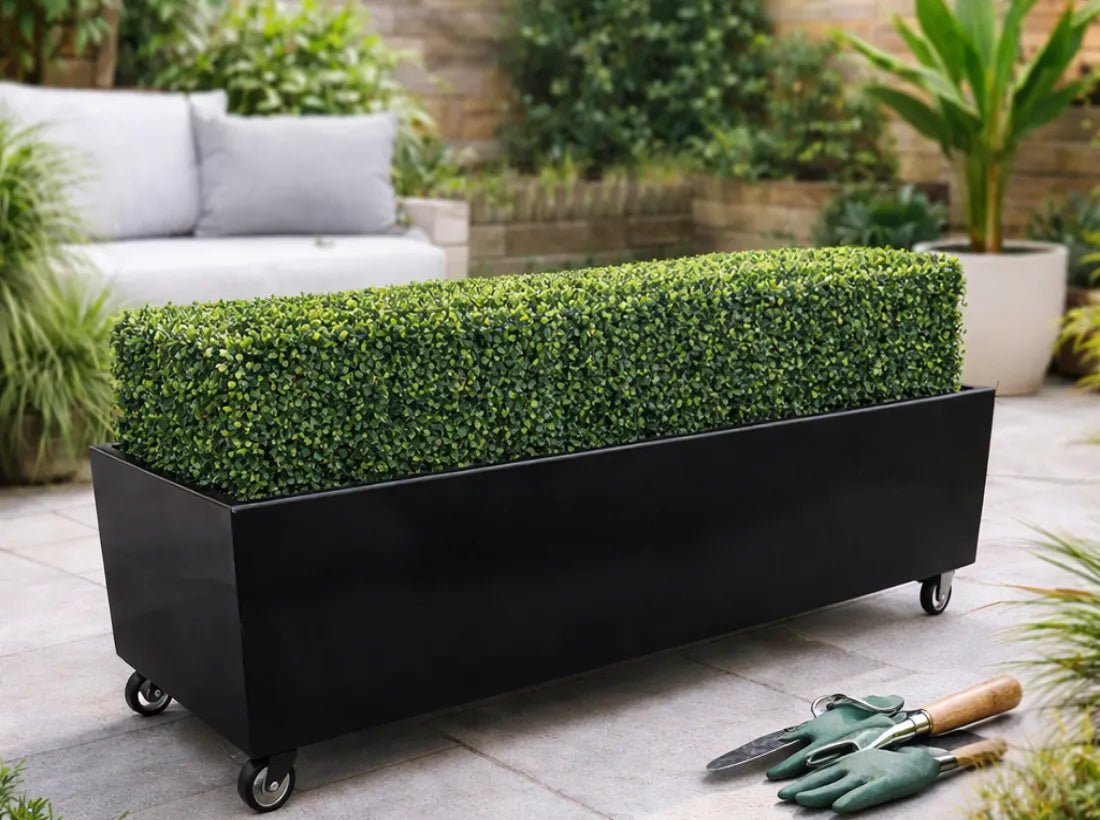
Has encontrado el seto artificial perfecto para tu espacio.
Has medido tu espacio, comprobado la clasificación UV y estás listo para transformar esa cerca o balcón vacío en algo que merezca una segunda mirada. Pero luego ves una maceta que te parece genial y empiezas a pensar: ¿Necesito una maceta para esto, o puedo simplemente instalarlo tal cual?
Esta es una preocupación práctica que no siempre recibe la atención que merece. Al fin y al cabo, estás invirtiendo en vegetación artificial de alta calidad que está destinada a durar años, ¿no debería la base considerarse con la misma atención?
La decisión sobre las macetas puede marcar una gran diferencia en tu espacio. Aun así, no todos los setos artificiales necesitan una maceta, pero entender cuándo tiene sentido una puede hacer que tu exhibición se vea mucho mejor.
Si quieres obtener la belleza y la conveniencia de la vegetación artificial, este es un detalle que vale la pena acertar desde el principio.
Beneficios de usar una maceta para setos artificiales

Los setos artificiales son versátiles por sí solos, pero combinarlos con la maceta adecuada puede llevar tu configuración de funcional a excepcional.
Una buena maceta es como un marco que completa la imagen y la base que ancla el diseño. A menudo, es un detalle que hace que tu follaje artificial parezca intencional.
Así es como una maceta puede mejorar tu exhibición de setos artificiales:
-
Definición visual: Las macetas crean límites claros en tu espacio y le dan a tu seto artificial un punto de inicio y final definido. Una maceta puede funcionar como un ancla visual que le indica al ojo dónde enfocar su atención, lo cual es especialmente importante en áreas de planta abierta que necesitan delimitación.
-
Estética: La maceta adecuada añade una capa de pulido que es difícil de conseguir de otra manera, ya que aportará su propio carácter a la instalación de tu seto. También te permite combinar con tu decoración existente y complementar el estilo de tu espacio.
-
Altura y escala: Una maceta le dará a tu seto elevación, lo cual es invaluable cuando necesitas que alcance una altura específica para privacidad o impacto visual. En lugar de comprar setos más altos, puedes usar una maceta elevada para añadir esos centímetros extra, lo cual es especialmente útil para balcones o patios.
-
Flexibilidad: A diferencia de los setos instalados permanentemente en el suelo, una maceta te permite reorganizar tu disposición a medida que tus necesidades cambian. Puedes mover fácilmente tus setos sin reinstalarlos, por lo que tus setos se convierten en una verdadera inversión que se mueve contigo, una opción particularmente inteligente para inquilinos.
Cómo instalar un seto artificial en una maceta
Instalar un seto artificial en una maceta es sorprendentemente sencillo y está diseñado para ser logrado en pocos minutos sin ayuda profesional:
Paso 1: Para empezar, debes elegir tu seto artificial independiente favorito de nuestra colección y anotar sus dimensiones.
Paso 2: Luego, busca macetas que sean compatibles con las medidas de tu seto. La mayoría de los setos artificiales están diseñados para encajar en nuestros tamaños de macetas estándar, pero vale la pena verificarlo antes de empezar.
Paso 3: Antes de colocar el seto dentro, añade peso y estabilidad a tu maceta. Este paso es crucial para instalaciones exteriores donde el viento puede ser un problema. Llena la parte inferior de tu maceta con arena, grava u otros materiales pesados.
Paso 4: Coge tu seto artificial y colócalo dentro de la maceta. Luego, ahueca las hojas artificiales para asegurarte de que se vean lo más naturales posible.
Paso 5: Da un paso atrás y evalúa tu instalación desde múltiples ángulos. Comprueba que el seto esté nivelado y recto, sin huecos obvios ni desalineaciones. Sacude suavemente el seto para probar su estabilidad y asegúrate de que se sienta sólido e inamovible.
Mira cómo nuestro gerente de almacén, Will, completa su instalación de maceta en menos de un minuto:
Consejos de diseño de macetas para tu seto artificial

La maceta que elijas será una parte integral de tu diseño general, y puede mejorar o socavar el impacto visual de tu seto artificial.
Acertar en esta decisión significa pensar más allá de la simple contención y considerar cómo cada elemento trabaja en conjunto para crear una apariencia cohesiva.
Gracias a nuestras décadas de experiencia, tenemos algunos consejos que debes considerar:
Combina el estilo de la maceta con tu decoración
Tu maceta debe hablar el mismo lenguaje de diseño que tu espacio existente. Si ya has invertido en muebles de exterior modernos, una maceta negra elegante es una buena opción. Pero, si tienes un jardín tradicional o una propiedad histórica, lo mejor es optar por macetas de madera con vetas naturales.
Al final, el objetivo es lograr un ajuste perfecto: una combinación de seto y maceta que parezca que siempre ha pertenecido a tu espacio.
Mezcla elementos decorativos
Las macetas ofrecen una oportunidad para añadir tu personalidad y detalles. Así que no dudes en exagerar un poco: añade piedras decorativas, guijarros o mantillo de vidrio de color en las áreas expuestas dentro de tu maceta para crear un aspecto acabado.
Además, piensa en integrar luces solares para caminos alrededor de la maceta o colocar guirnaldas de luces en el follaje del seto para un brillo sutil. No tengas miedo de añadir algunos detalles; eso es lo que hará que tu proyecto de seto artificial se vea más curado.
Considera el color y la textura para el realismo
Las instalaciones de setos artificiales más convincentes prestan atención a cómo interactúan los colores y las texturas en todos los elementos. Si tu seto artificial presenta boj verde oscuro, combínalo con una maceta negra intensa para aún más profundidad.
Las variedades de setos más claras se benefician de macetas en tonos gris piedra, salvia o madera natural que proporcionan un contraste sutil sin competir por la atención.
La textura también importa, así que las macetas lisas y brillantes se ven contemporáneas, mientras que la madera y la piedra se sienten orgánicas.
Elige la maceta adecuada para tu seto
Por último, pero no menos importante, debes asegurarte de que el tamaño de tu maceta sea el adecuado, un punto crucial para la estabilidad y las proporciones. Demasiado pequeña, y tu seto se verá desequilibrado (y quizás ni siquiera quepa); demasiado grande, y la maceta empequeñecerá el seto.
Mide cuidadosamente las dimensiones de la base de tu seto antes de seleccionar una maceta. Debes asegurar un ajuste ceñido con suficiente espacio para acomodar la estructura del marco y los materiales de lastre.
En caso de duda, es mejor optar por un tamaño ligeramente más grande que más pequeño, ya que siempre puedes añadir más lastre a una maceta espaciosa, pero no puedes instalar un seto de gran tamaño en un recipiente pequeño.
Consideraciones finales
Decidir si comprar una maceta para tu seto independiente tiene que ver con asegurar que tu instalación se vea intencional, se sienta estable y mejore tu espacio durante años.
Afortunadamente, no tienes que navegar por estas elecciones solo. Nuestro equipo tiene años de experiencia decorando con plantas artificiales, solucionando problemas de instalaciones y ayudando a los clientes a evitar los costosos errores que provienen de las conjeturas.
Cuando necesites asesoramiento, reserva una consulta gratuita con nuestros expertos para obtener recomendaciones personalizadas basadas en tu espacio, preferencias de estilo y requisitos prácticos. Te guiaremos a través de las opciones, responderemos tus preguntas y nos aseguraremos de que tengas todo lo necesario para un resultado profesional la primera vez.